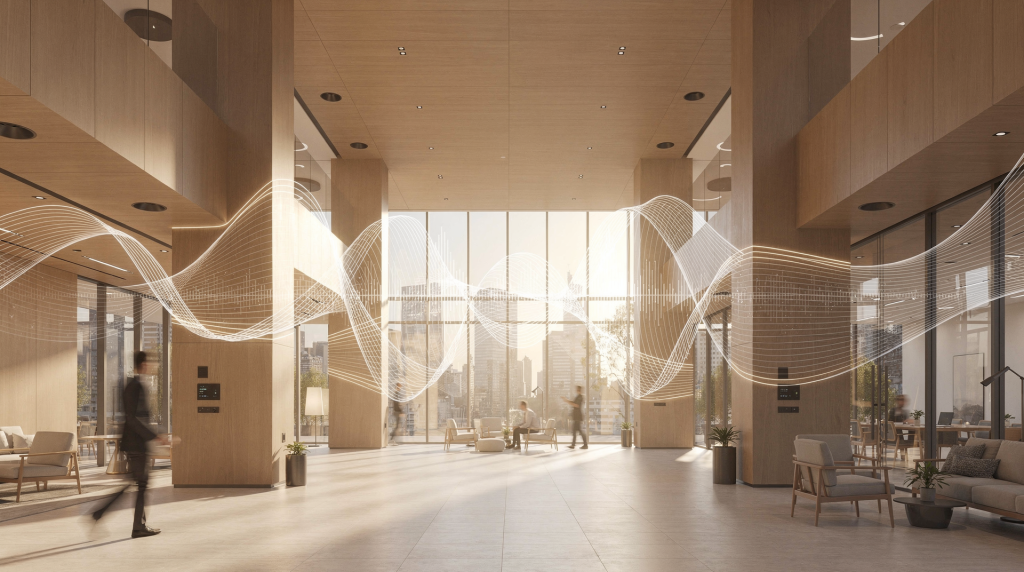
If there’s one thing I’ve learned from over a decade of filming architecture and real estate, it’s that sound does more to sell a space than any lens I can put on the camera. A clean, static building video can look sharp, but it stays flat until you give it an acoustic presence. The right sound design transforms an empty room into a place that feels inhabited, textured, and immediate. It’s not an afterthought or a coat of polish; it’s a storytelling tool that shapes atmosphere, directs the viewer’s attention, and communicates scale and materiality directly to the gut.
Why sound matters in architectural storytelling
Every building speaks with its own voice. A polished marble lobby rings differently than a timber‑clad living room, and a narrow concrete stairwell creates an echo that a carpeted hallway never will. As a cinematographer, I learned early that sound translates these physical characteristics into emotional experience. When you hear the subtle crispness of footsteps on stone, it doesn’t just describe the floor—it makes you feel the cold hardness underfoot. Conversely, the soft hush of footfalls on wood suggests warmth and domesticity. A high‑rise lobby with a long, controlled reverb feels expansive and deliberate; a cramped corridor with tight reflections feels confined. In film language, we talk about building a complete sonic world. That’s not just layering effects over picture—it’s weaving a fabric that anchors viewers in a real environment, reveals material texture and spatial scale, and breathes life into the frame without needing more visual movement. For space‑focused content, sound does three jobs at once: it places the viewer in a specific location, it lets them “feel” the materials through sonic texture, and it injects vitality into an otherwise static frame.
What “building feels alive” actually means
A space feels alive when the sound tells you that people have been there, that air moves through the place, and that materials react to touch, footsteps, and distance. It’s not about filling every second with busy noise; it’s about shaping sound so the building feels active in a believable way. I think of it as four co‑existing layers: a stable room tone or ambient bed; specific physical sounds like door latches or light switches; transitional effects that guide the cut; and deliberate silence that lets the architecture breathe. Sound designers often speak of dialogue, music, effects, ambience, Foley, and silence working together as one integrated soundscape. For architectural videos, the building itself becomes the main subject, but the principle is identical. Every creak, hum, and footfall contributes to the illusion that the space is inhabited, even if the camera shows no one there.
The core sound layers for architectural and real estate video
| Layer | Purpose | Example in a building film |
|---|---|---|
| Room tone | Creates continuity and realism | Soft HVAC hum in a modern condo |
| Ambient bed | Establishes location and scale | Distant traffic outside a city apartment |
| Foley / physical detail | Makes materials feel tangible | Footsteps on wood, elevator buttons, door latches |
| Transitional effects | Connects shots smoothly | A door closing leading into the next room |
| Silence | Draws attention and adds contrast | Quiet pause in a gallery‑like interior |
Start with location sound, not post-production fantasy
The best architectural sound design begins on location, not in the edit suite. I make it a habit to bring a portable recorder and a good stereo mic on every scout day and shoot day alike. Real, usable production sound gives you raw material that you simply cannot fake later with library samples. Before I even power on the camera, I listen. I walk the rooms and note the specific acoustic signature of each space. Whenever possible, I capture:
- Natural room tone in every major space—a full minute, if I can get it
- Footsteps on each floor surface, from polished concrete to thick carpet
- Door open and close sounds (hinges, latches, the weight of the slab)
- Cabinet pulls, drawer slides, light switches, faucet turns
- Elevator calls and the mechanical hum of the cabin moving
- Exterior texture bleeding through windows: birds, distant traffic, wind
- Any defining mechanical character—the subtle whoosh of a climate system, the gurgle of old plumbing
Recording these on the day forces you to think about sound as part of the film’s structure, not a cosmetic layer. In my experience, the projects where I’ve planned the audio from the very first location walk end up with a coherence that no amount of after‑the‑fact Foley can match.
How to record sound that makes a building feel real
1. Record a clean room tone in every key space
Hold a few quiet takes in each room. No one speaks, no one moves, and I even wait for the HVAC to cycle off. What I get is a pure fingerprint of the space: the room’s natural air pressure, the distant bleed of the street, the almost‑inaudible settling of the building. This becomes my most versatile asset in the edit—a consistent bed under cutaways, a reference for matching ambience, and a solid glue when I need to extend a shot. I typically capture at least 30 seconds, but a minute is better; it gives me enough to loop seamlessly.
2. Capture footsteps as a storytelling tool
Footsteps are deceptively powerful. They instantly communicate material, pace, and the weight of the walker. I’ll record variations: a slow, deliberate stride on terrazzo, a soft creep on bedroom carpet, echoing steps down a concrete stairwell, even barefoot or socked steps for intimate residential scenes. I often use a lav mic clipped to my shoe heel for close‑up texture, mixing it with a boom overhead to capture the room’s response. The combination gives both the tactile detail and the sense of space.
3. Record interactions with the space
Viewers may not consciously notice a light switch, but they’ll feel its absence. These micro‑sound events make a shot feel physically real. I always grab the obvious ones: the precise click of a cabinet latch, the smooth slide of a window, the thunk of a deadbolt turning. I keep a small contact mic handy for recording mechanical details—placing it directly on a faucet or on the frame of a sliding door yields a level of texture you can’t get from a few feet away.
4. Capture perspective shifts
A building comes alive sonically when sound changes with distance and enclosure. I’ll record a given scene from multiple positions: inside the room with windows open to the street, from the corridor just outside, from a stair landing overlooking a lobby. This gives me an acoustic palette that mirrors how the camera moves through the building. When I cut from a tight interior to a wide atrium, I can match the audio perspective to the visual one, and the architecture suddenly breathes.
Building a soundscape for different types of spaces
Residential interiors
For homes and apartments, sound should feel intimate and controlled—comfort, privacy, and material detail are the goals. I lean on a soft room tone with very gentle footsteps, the subtle hum of a refrigerator or HVAC as a baseline, and maybe the faintest exterior bleed: birdsong through an open window, a distant lawnmower. I avoid anything that enlarges the space artificially. Overdoing reverb makes a cozy living room feel like a lobby, which kills the domesticity.
Historic buildings
Older spaces need sonic restraint. The age of the building is best expressed through quiet, characterful sounds: the creak of original wood floors, the distinct weight of a heavy door, a distant echo in a plastered hallway. I’ll often let the room tone run longer than usual and use controlled reverberations rather than adding music. I once filmed a 19th‑century townhouse where the floorboards would speak with the slightest shift in weight; rather than reduce it, I amplified it subtly in the mix. The result felt authentic and storied.
Luxury real estate
Luxury content often fails when it sounds sterile. There’s a fine line between minimal and dead. I treat high‑end spaces with very precise, clean Foley: the soft click of a light switch, the almost‑inaudible whisper of a curtain, a single footstep on marble. The ambience is present but barely there—a controlled silence that suggests effortless elegance. I avoid sentimental music beds that could cheapen the feel; instead, I use a very subtle tonal pad if the space needs emotional warmth.
Urban exteriors
When I’m on a rooftop or filming a façade, sound must communicate scale and context. I layer distant traffic hum, wind moving through glass balustrades, the crunch of feet on gravel or metal grating. I’m not afraid of a distant siren or a burst of city life—it anchors the building in a real city. Then I’ll use a moment of near‑silence to separate the architecture from the surrounding chaos, making the building feel monumental and apart.
A practical workflow for sound design in building films
Step 1: Define the emotional goal
Before I unpack a single mic, I walk the location and decide on the emotional signature: calm, expansive, historic, lived‑in, precise, monumental, intimate. That one word becomes my North Star for every audio decision. If the goal is “monumental,” I’ll deliberately use long decays and quiet, weighty Foley. If it’s “intimate,” I’ll keep reflections short and bring up subtle domestic sounds.
Step 2: Sort your sound into three categories
I use a simple mental bucket system. Functional sounds (footsteps, doors, switches, appliance hums) give the space tangibility. Atmospheric sounds (room tone, city bed, wind, HVAC) create a sense of place. Narrative sounds (a key turning in a lock, a chair sliding into frame) support a story beat. Categorizing early helps me balance the mix later.
Step 3: Edit for continuity
Room tone is my glue. Whenever I cut from a kitchen to a hallway, I’ll crossfade the respective ambiences so the transition feels natural, not jarring. Without that sonic consistency, even the most beautifully lit shots can feel like disconnected fragments. I’ll often lay down a continuous ambient track first and then edit picture on top of it, so the scene always breathes seamlessly.
Step 4: Layer carefully
I start with a single, strong ambient bed and add Foley only where the frame needs it. A useful rule I follow: one clear atmospheric layer, a few precise physical details, and absolutely no clutter. If a sound doesn’t serve the space or the cut, it comes out. Less, in architectural sound, is almost always more.
Step 5: Check the mix on multiple speakers
A mix that feels rich and ambient on studio monitors can turn muddy on a laptop or harsh on earbuds. I always test on headphones, laptop speakers, and a small Bluetooth speaker. Each reveals different problems: laptop speakers may lose the room tone entirely, while earbuds can exaggerate high‑frequency clicks. I adjust until the soundscape holds up across all of them, because my clients will view the video on their phones as often as on big screens.
Common mistakes that make buildings feel dead
- Using generic stock ambience everywhere. A “city atmosphere” loop flattens the uniqueness of a location. Every building has a distinct acoustic footprint; capture it.
- Overloading the mix with effects. Too many whooshes and transition hits turn the building into a trailer, not a real place. The space should feel inhabited, not marketed.
- Ignoring the natural acoustics of the room. Hard surfaces, curtains, ceiling height—they all shape how sound behaves. I match my audio to the actual geometry, not a preset reverb.
- Leaving the audio flat and static. A living space should shift subtly over time. Even a steady HVAC drone can be modulated by opening a door or moving to another room; the edit should reflect that dynamism.
- Making the mix too clean. Total sonic perfection often strips away realism. A little texture—the hum of old wiring, the faint creak of a floorboard—can make the difference between a showroom and a home.
- Using music as a replacement for atmosphere. Music can support mood, but if it’s the only thing you hear, the building’s voice disappears. The space itself must do the primary storytelling.
When silence is more powerful than sound
One of the most overlooked tools in sound design is intentional, near‑total silence. I don’t mean muting the audio track, but a deliberate drop in activity that leaves only the faintest room tone or a single lingering reverb tail. Silence works exceptionally well when you’re revealing a hero shot—maybe a grand staircase or a gallery‑like expanse—or when you want to emphasize a material surface. I’ve used it to punctuate the moment before a door opens, allowing the latch click to feel like a narrative beat. In one project, I stripped away all ambience just as the camera pushed into a double‑height lobby, leaving only the soft susurrus of distant traffic through glass. The quiet made the space feel monumental in a way that no music swell could. Absence is a presence of its own.
A simple checklist before you export
I run through these questions on every project, usually with headphones on and eyes closed:
- Does every major space have its own sonic identity, or do rooms blur together?
- Are footsteps and material sounds believable, or do they sound like library effects?
- Is there a consistent ambient bed holding the edit together, or do cuts feel abrupt?
- Do transitions feel smooth, not jarring?
- Does the mix reflect the actual scale of the building, or is a closet echoing like a cathedral?
- Are any effects distracting from the architecture itself?
- Does the final sound support the intended mood, or is it fighting the visuals?
A usable sound design formula for architectural video
If you need a starting point, here’s the template I’ve used on hundreds of shoots:
- Base: Room tone or location‑specific ambient bed
- Texture: Footsteps, door movements, small interactions that make materials tangible
- Space: Distant exterior noise, carefully placed reverb, mechanical background
- Accent: One or two deliberate narrative sounds per scene—a key turning, a chair pulling out
- Breathing room: Controlled silence where the image needs weight
This structure works because it gives the viewer enough sonic detail to feel present without overwhelming the frame. The architecture remains the star.
FAQ
Should real estate videos always use music?
No. Music can set a mood, but if it overwhelms the natural acoustics, the space feels fake. A strong ambient bed and precise Foley often do more to convey realism and atmosphere. Use a track only if it disappears into the background; if you notice the music before the room, cut it.
How much foley is too much?
If viewers think “nice sound effect” instead of “nice floor,” you’ve overdone it. Foley should support the image, never perform over it. I aim for a subtle texture that registers subconsciously. When I watch a cut and find myself concentrating on a door latch, I pull it back 3 dB and it usually slides into place.
Can sound design make a small space feel bigger?
Yes, but only subtly. By using a slightly longer room tone, a touch of early‑reflection reverb, and restrained ambience, you can suggest openness without making it sound fake. I’ve applied this in tiny studio apartments: I let the air conditioner hum carry a little tail and left the window slightly open to let in a diffuse city bed, and suddenly the square footage felt less confining.
Is it okay to use silence in property videos?
Absolutely. Silence—or near‑silence—can be one of the most effective ways to emphasize elegance, scale, and material quality. I deliberately leave a hero shot quiet for a heartbeat before the next scene, and the contrast makes the architecture feel monumental.
What is the biggest mistake beginners make?
They treat sound as cleanup—something to fix after the picture is locked. In architectural filmmaking, sound must be planned as a storytelling element from the very first location scout. The moment I started thinking about the acoustic signature of a building alongside its visual composition, my work felt deeper and more immersive.
Final thoughts
Buildings feel alive when sound gives them texture, scale, and behaviour. The goal isn’t to invent drama where none exists; it’s to reveal the quiet life already built into the space. The echo of a stairwell. The softness of a room tone. The weight of a door closing. The hum of a city beyond the glass. When you handle sound design with care, a building video stops being a walkthrough and becomes an experience. Next time you frame a space, listen first. That’s where the real story lives.